by Ben Tredinnick
Photo Credit: Rebecca Blackwell/AP
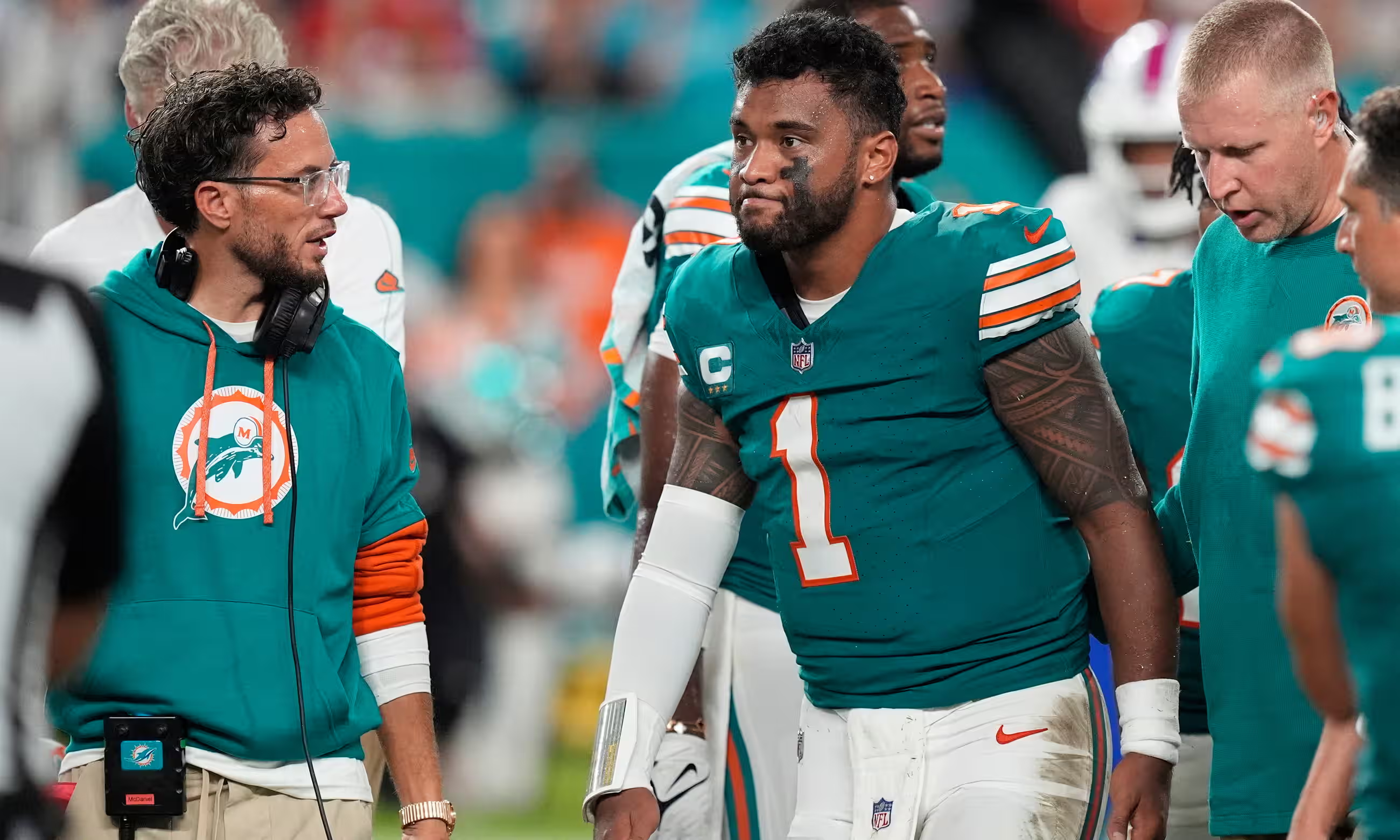
Miami Dolphins quarterback Tua Tagovailoa left his teams game with the Buffalo Bills in the third quarter due to suffering a concussion. This was caused by Tagovailoa colliding with Bills’ defensive back Damar Hamlin, then hitting the back of his head against the turf.
This is the fourth concussion that the Dolphins’ quarterback has suffered in several years and has led to many fans and NFL players calling for Tua to retire from the sport for his safety.
Former NFL Wide Receiver Dez Bryant tweeted:
“That’s it. NFL, go ahead and do the right thing. Tua has had entirely way too many concussions. He needs to retire for his longevity health concerns.”
While Antonio Brown tweeted:
“In all seriousness, Tua may want to rethink playing football in the future, depending on the severity. Concussions are not something to mess with.”
The Impact on Concussions of the Brain
Due to the nature of football, injuries are likely to happen to many players. Some of these injuries, like an ACL tear, may happen to a player multiple times throughout their career. However, these injuries can be fixed through surgery, and the player can recover.
Concussions or any form of head injury do not fall into this category. As with the majority of contact sports, concussions are something that could happen to the players. But, unlike an injury like a torn ACL, the damage to the person affected by the concussion can last.
Multiple concussions, especially over a short period, as we have seen with Tua Tagovailoa, can have a severe impact on the person. For example, an Oxford University study from 2023 found that those who have had three concussions had worse brain functioning, especially around the areas of attention and the ability to complete complex tasks. This impact only gets worse with every future concussion.
The NFL has recently been dealing with the impact of Chronic Traumatic Encephalopathy (CTE) on its former players. This is a form of brain damage that is the result of repeated trauma and blows to the head. It can be fatal and lead to personality changes as well. A Boston University study has heavily linked CTE to the NFL and found that in a study of 376 former NFL players, 345 of them had/have CTE.
What has the NFL done to limit the impact of concussions?
The NFL, as with many contact sports, has been implementing ways to minimize the chances of concussions and subsequent damage to the brain in its players. Due to the repeated concussions of Tagovailoa, they have updated their concussion protocol to add further medical checks to prevent forms of long-term damage.
Additionally, implementing the “Guardian Cap,” a soft pad worn over the helmet, which absorbs at least 10% of the force of a hit, has been a remarkable safety innovation. Players now have to wear this in training, and from 20they to 24, they can wear it in a game.
Tagovailoa was not wearing a guardian cap during the Buffalo game, but it cannot be said that this would have stopped him from suffering the concussion at the moment.
But should Tua retire? He would likely not want to. He is one of the top quarterbacks in the NFL, and he has the potential to take the Miami Dolphins far.
However, as research and previous examples have found out, having four concussions will have an effect on him in the future. He may have to decide between his success at the moment or his future well-being, which no one should make at age 26.